
Maintaining a clean pool isn’t just about aesthetics; it’s crucial for health and safety. Pool cleaning involves removing debris, balancing chemicals, and ensuring the water is crystal clear. Let’s dive into practical tips and expert advice on keeping your pool in top shape.
A clean pool isn’t just visually appealing; it ensures a safe swimming environment. Bacteria, algae, and debris can make your pool unsafe, leading to health issues and costly repairs. Regular cleaning extends the lifespan of your pool and its equipment, providing a consistent and enjoyable swimming experience.

Using a skimmer or net daily helps remove leaves, insects, and other floating debris. This simple task prevents clogs in your pool’s filtration system and maintains clear water.
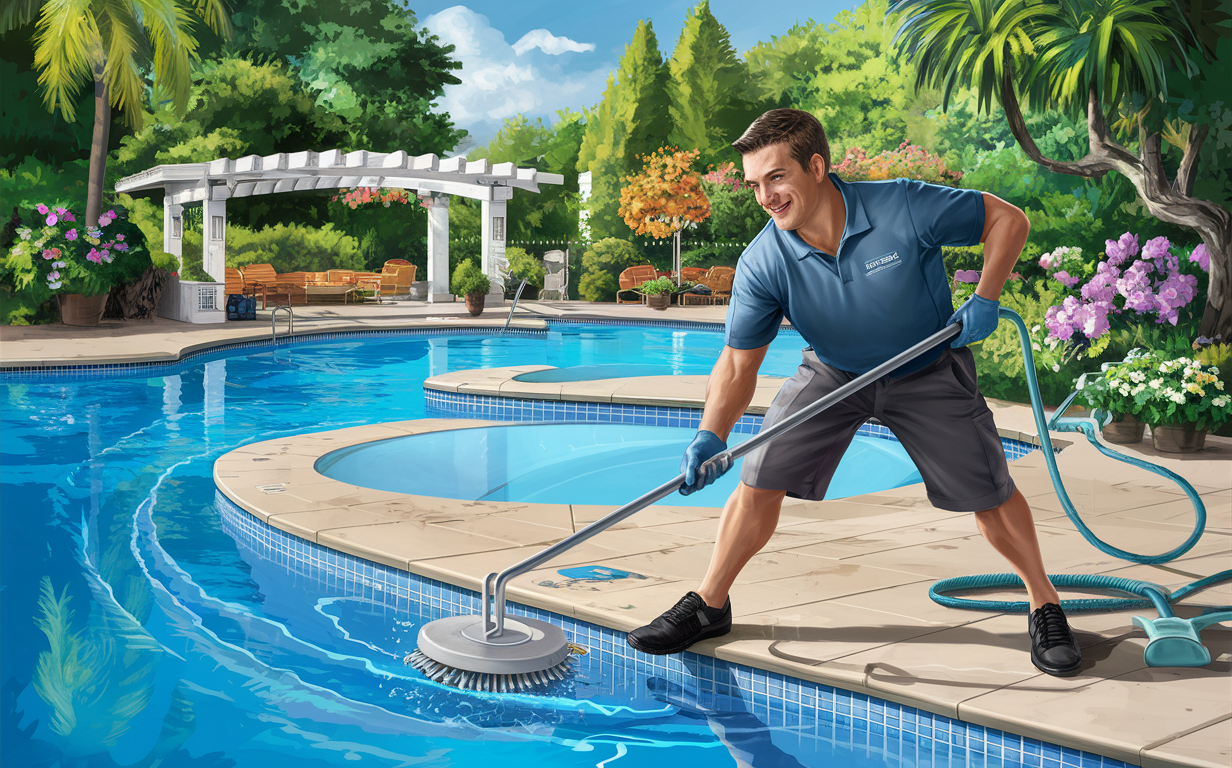
Brushing the walls and floor of your pool prevents algae buildup and keeps surfaces smooth. Different areas require specific brushes – nylon for tiles and stainless steel for concrete pools.
Pool vacuums are essential for thorough cleaning. Options range from manual to automatic and robotic vacuums, each with unique benefits. Regular vacuuming ensures dirt and algae are removed from the pool floor.
Balancing chemicals is vital. Test kits measure pH, chlorine, alkalinity, and calcium hardness levels, ensuring your water stays safe and clear.
Automatic dispensers maintain consistent chemical distribution, reducing the manual effort required to balance your pool’s water.
Start by using a skimmer to remove leaves and debris from the water’s surface. This simple task should be done daily to maintain water clarity.
Brush the entire pool surface at least once a week. This prevents algae buildup and keeps pool surfaces smooth. Pay attention to waterline tiles and corners where dirt accumulates.
Whether using a manual or automatic vacuum, ensure the pool floor is free from dirt and debris. Depending on usage, this should be done weekly or bi-weekly.
Use a water testing kit to check pH, chlorine, and other chemical levels. Adjust as necessary to maintain a balanced, safe swimming environment.
Your pool’s filter traps particles and debris. Clean or backwash the filter regularly to ensure efficient operation. The frequency depends on usage and filter type.
Shocking involves adding a high dose of chlorine to eliminate bacteria and algae. This should be done weekly or after heavy use.
Regularly check pumps, heaters, and other equipment for wear and tear. Early detection of issues prevents costly repairs and extends the lifespan of your equipment.

Saltwater pools require less chlorine but need regular monitoring of salt levels and periodic cell cleaning to prevent calcium buildup.
Heated pools can harbor bacteria if not properly maintained. Regular cleaning and chemical balancing are essential for heated pools.
If your pool turns green, it indicates an algae problem. Shock the pool with chlorine, scrub surfaces, and run the filter continuously until the water clears.
Leaks can cause water imbalance and structural damage. Regularly inspect for wet spots around the pool and monitor water levels for unusual drops.

Neglecting chemical balance leads to cloudy water and algae growth. Regular testing and adjustment are crucial.
Inconsistent cleaning results in debris buildup and potential equipment damage. Establish a routine to keep your pool in top condition.
Using improper brushes or vacuums can damage pool surfaces. Choose tools appropriate for your pool type.
Ignoring small equipment issues can lead to major repairs. Regularly inspect and maintain all pool equipment.


| Aspect | DIY Cleaning | Professional Cleaning |
|---|---|---|
| Cost | Lower | Higher |
| Time Investment | Significant | Minimal |
| Expertise Needed | High | Provided by professionals |
| Equipment | Personal purchase required | Provided by the service |
| Maintenance Level | Dependent on individual effort | Consistent and thorough |
Regular maintenance offers numerous benefits:

| Chemical | Ideal Range | Function |
|---|---|---|
| pH | 7.2 – 7.6 | Balances acidity and alkalinity |
| Chlorine | 1 – 3 ppm | Disinfects and kills bacteria |
| Alkalinity | 80 – 120 ppm | Stabilizes pH |
| Calcium Hardness | 200 – 400 ppm | Prevents scaling and corrosion |
| Cyanuric Acid | 30 – 50 ppm | Protects chlorine from UV degradation |

Be prepared for unexpected pool issues:

Daily skimming and weekly brushing prevent debris accumulation and algae growth.
Regular testing and adjusting of chemical levels keep your water safe and clear.
Regular checks and maintenance of pumps, filters, and heaters ensure efficient operation.
Consider professional services for comprehensive cleaning and maintenance.
Keeping your pool clean requires dedication and regular maintenance. By understanding the importance of each step and using the right tools, you can enjoy a safe, sparkling pool year-round. Whether you choose to do it yourself or hire a professional, consistency is key to a healthy and inviting swimming environment. Keep these tips in mind, and your pool will be the highlight of your home.
Remember, a well-maintained pool isn’t just for show; it’s a haven of safety and enjoyment for you and your family. Invest in your pool today, call us anytime at
+1 (305)-786-POOL or schedule an appointment now.
